What an Anjouan gaming license gives players, why sign-up needs only an email at first, how data is collected step by step, and how to check the license in two

The Anjouan license is on the rise. More and more platforms are picking it, right next to the established names — Curacao, Malta, Gibraltar. A few years ago almost nobody outside the industry had heard of this small island in the Comoros. Now its badge shows up on casino footers every single week. So what changed, and what does it actually mean for you as a player?
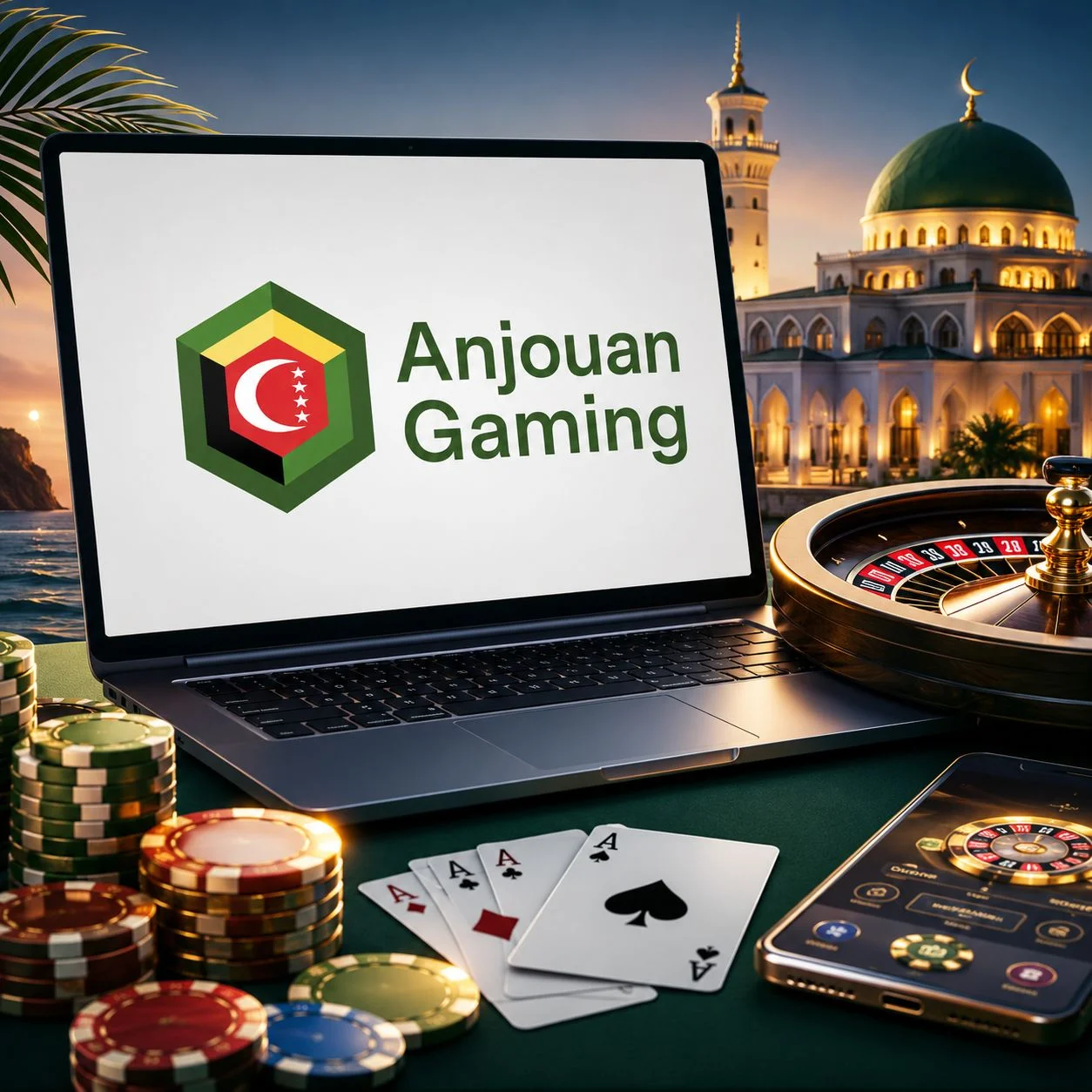
Let’s break it down: what the license covers, what it gives you, why you can often register with nothing but an email, how your data gets collected later on, and how to check an Anjouan license yourself in about two minutes.
What is an Anjouan gaming license?
Anjouan is an autonomous island in the Comoros, out in the Indian Ocean. Its regulator issues one universal license that covers the whole spread — online casino, live dealer, sports betting, poker, even crypto-based games. That’s the first thing worth knowing: an operator doesn’t need a separate permit for each vertical. One license, one framework, every product under it.
The jurisdiction is young. Gambling was legalised here back in 2005, but the modern, streamlined process only took off around 2023. That speed and low cost are exactly why an Anjouan gaming license now turns up almost everywhere you look.
What the license gives you as a player
A license is your shield — we cover the full logic in our guide on why an online casino license matters and how to check it. Anjouan follows the same basic principles.
- Certified random number generators, so game outcomes are genuinely random and not quietly tilted against you.
- Anti-money-laundering rules and responsible-gaming obligations the operator has to honour.
- A single set of conditions the casino must play by, with a regulator sitting above it.
It’s not the strictest jurisdiction on earth — Malta and the UK demand far more. But it’s a real framework with real rules, not a free-for-all. For a player, that’s the line that matters.
Sign up with just an email
Here’s where Anjouan casinos get genuinely interesting for a careful player. On most of them you can register with almost nothing: a working email, a confirmation that you’re of legal age, and a tick on the terms and conditions. That’s it. No passport, no proof of address, no source-of-funds questionnaire at the door.
Why does that matter? Because it lets you walk in and look around before you hand over a single document. You can see the real interface, browse the actual game library, check the table limits, test how fast the pages load and how the support chat replies — all from the inside, not from a polished marketing screenshot. You get to judge the product before the product asks anything of you.
For anyone who’d rather not scatter their ID across ten different sites just to “have a look,” that’s a real advantage. You stay in scouting mode, and your personal data stays with you until you’ve decided a platform is worth it.
How your data is collected, step by step
One honest point up front: none of this makes an Anjouan casino “anonymous” or “KYC-free.” It isn’t, and any site that claims otherwise is exactly the kind you should walk away from. What actually happens is progressive — your data is requested in stages, as you cross certain thresholds, not all at once on day one.
Roughly, it unfolds like this:
- Email and age confirmation — enough to open the account and explore.
- Basic identity details — usually around your first deposit.
- Full verification (ID document, proof of address) — when you request a withdrawal or pass a set accumulated turnover.
The principle is data minimisation: you reveal exactly as much as the current step needs, and not a step earlier. For a privacy-conscious player that’s the sweet spot — you control when your information goes out, and you only fully verify with the platform you’ve already chosen to trust.
How to check an Anjouan license in two minutes
Don’t take the badge at face value — verify it. A legit casino always publishes its license details: number, regulator, often a clickable seal. Look at the footer of the homepage or the “About” section.
- Find the license number on the casino site.
- Go to the Anjouan Gaming Board register.
- Confirm the number is listed and active.
If there’s no license data anywhere on the site, treat that as a red flag and move on. If the number exists but doesn’t show up on the regulator’s side, that’s worse — a classic sign of a fake.
And a fair caveat: Anjouan’s own verification has been patchy. At times the regulator’s check links have simply returned errors, which makes confirming a license harder than it should be. So cross-check — look the casino up on independent review sites too, not only the regulator’s page. The same habits from our online casino license guide apply here one to one.
Restricted countries
The Anjouan license is broad, but not global. The Anjouan license restricted countries list includes, among others, the USA, the UK, Germany, France, Spain, the Netherlands, Australia, and all FATF-blacklisted jurisdictions. If you’re in a restricted market, an Anjouan casino won’t — or shouldn’t — accept you. Always check the casino’s own terms for the current country list before you deposit.
Anjouan-licensed casinos
Plenty of operators now run on this license, and crypto casinos lean on it especially hard. The Anjouan license openly allows blockchain-based gaming and coins like Bitcoin, Ethereum and Tether, which fits a crypto-first platform neatly — and the low-friction, email-first sign-up pairs naturally with players who value their privacy.
FAQ
Is an Anjouan license legit?
Yes. It’s a real regulatory framework with AML and responsible-gaming obligations and certified game testing. It’s lighter than Malta or the UK, but it’s a genuine license — not a sticker.
How do I check an Anjouan casino license?
Find the license number in the site footer, then confirm it on the Anjouan Gaming Board register. If verification links fail, cross-check on independent review sites.
Can I really sign up with only an email?
On most Anjouan casinos, yes — email, age confirmation and accepting the terms is enough to explore. Full ID checks come later, around deposits and withdrawals.
Which casinos use the Anjouan license?
A growing number, crypto casinos especially. See our verified shortlist above and always confirm the license yourself before depositing.
Best Casinos