Discover the ancient and modern story of backgammon, from Mesopotamia to online games in the Arab world and beyond.

With over 11 million players on just one of the most popular platforms, backgammon is far from fading—it’s thriving. Digital platforms, mobile apps, and global tournaments have brought this ancient game back to the spotlight.
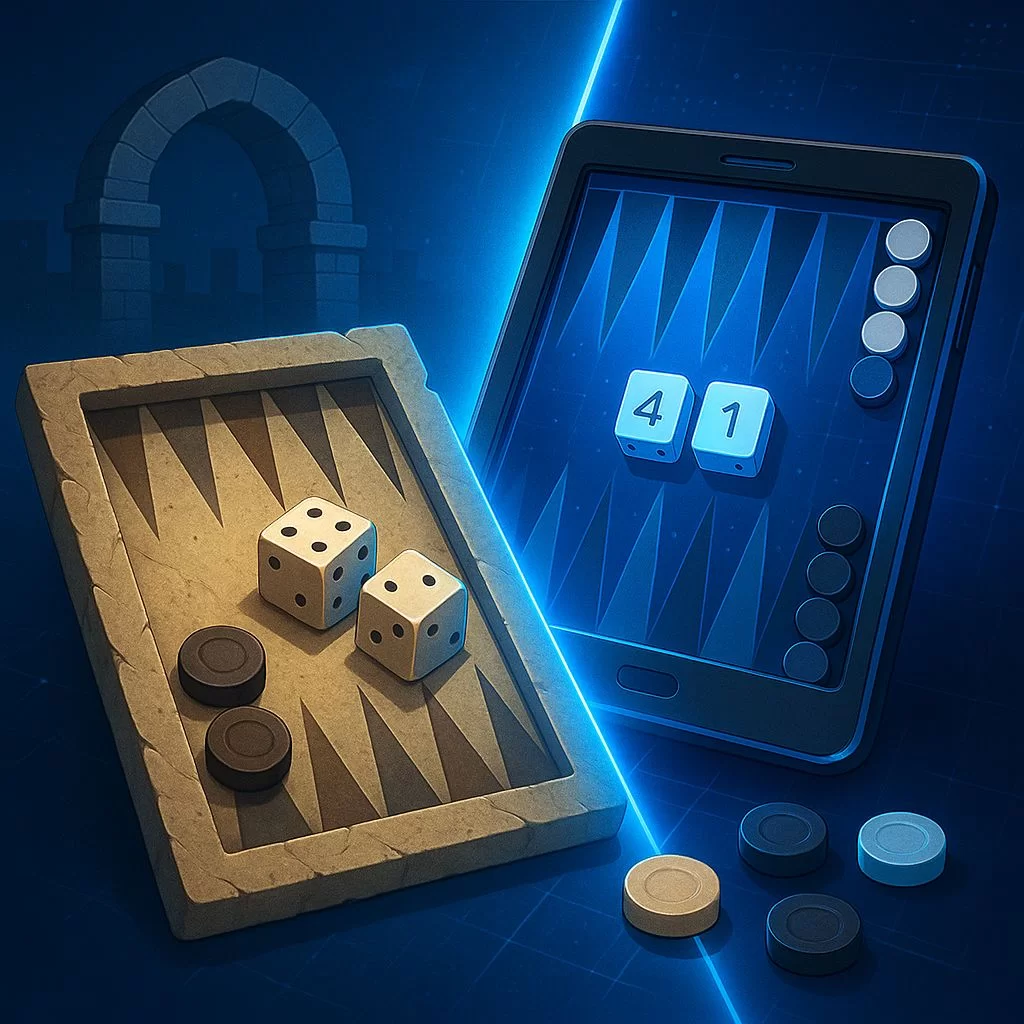
So no, backgammon isn't just your granddad's café game. It’s one of the oldest board games ever—and it’s still going strong today, especially online. Whether you're rolling dice with friends or playing for real money in an online casino, backgammon (or "Tawla" in Arabic) is having a moment.
The Origins: 5,000 Years of Rolling Dice
The earliest archaeological record of backgammon-like play dates back over 5,000 years. In the ancient Mesopotamian city of Ur (modern Iraq), a game set with a decorated board and pyramid-shaped dice was discovered in a royal tomb. This artifact, known as the Royal Game of Ur, shows the cultural importance of games even in early civilization.
Further findings in Sistan and Baluchestan (southeastern Iran) unearthed a board with checkers and dice dated around 300 BCE. Egyptian Senet, found in tombs such as that of Tutankhamun, was considered not just a pastime but a symbolic journey through the afterlife, reflecting how board games were intertwined with spirituality and social ritual.
Backgammon Goes Global
Board games involving dice and piece movement appeared in nearly every major ancient culture. In Rome, games like "Ludus Duodecim Scriptorum" were popular among all social classes—especially the elite. Historical texts mention Emperor Claudius carrying a custom game board in his carriage to play while traveling.
In Greece, Plato and Sophocles referenced board games as noble pastimes, and Homer described warriors relaxing with games during wartime lulls. In India, the strategic game of Pachisi emerged, later evolving into Ludo. In China, early forms of games using dice and tokens predate the Tang Dynasty.
These diverse regional variants show how the human love for strategy and chance transcended language and geography.
Rise of Nard in Persia
The Persian contribution is particularly significant. The game "Nard" (نرد), whose rules were detailed in Middle Persian texts, became a courtly pastime during the Sassanian Empire under Ardashir I (224–242 CE). Nard featured many of the same elements as modern backgammon: a 24-point board, 30 checkers, and two dice.
Persian poets and scholars wrote extensively about the game, often using it as a metaphor for destiny, wisdom, and the unpredictability of life. Some believe Nard symbolized the eternal struggle between opposing forces, with dark and light checkers representing good and evil.
Tawla in the Arab World: Still a Classic
The Arab world adopted and preserved the game as "Tawla," making it a cultural staple from the Abbasid Caliphate to the modern day. Historical records from the Islamic Golden Age mention scholars debating the game's moral implications, while merchants and travelers spread it across cities from Baghdad to Marrakech.
In places like Lebanon, Egypt, Syria, and the Gulf, Tawla is more than a game—it's a way to connect generations. Grandparents teach it to grandchildren, and friends gather around café tables for hours of strategic competition and laughter.
Backgammon in Arab Online Casinos
The digital shift didn’t leave Tawla behind. Today, Arab-friendly online casinos feature localized versions that respect traditional formats while enhancing the experience:
- Live multiplayer with regional opponents
- Arabic language support in UI and chat
- Modern, secure interfaces with realistic design
- Optional real-money matches regulated in licensed jurisdictions
On Arab-Casinos.com, we’ve curated platforms that combine tradition with technology, so you can experience Tawla with confidence and convenience.
Online Popularity and Global Stats
Backgammon isn’t just living online—it’s exploding. The game has more than 11 million players on platforms like Backgammon Live, one of the most downloaded backgammon apps in the world.
In the United States, surveys estimate over 3.5 million players, with hundreds of thousands playing regularly. A recent player study showed that over 90% of backgammon enthusiasts prefer online play, thanks to speed, convenience, and smart AI opponents.
In the Arab world, Tawla remains a daily habit in both physical and digital forms. From cafés in Beirut to apps on Dubai metro rides, the game is woven into everyday life. Localized apps and Arab online casinos now offer Arabic-language gameplay, traditional board styles, and fair regulation.
Quick Guide: How to Play Backgammon
Backgammon is played between two players. The goal is to move all your 15 checkers into your home board and then bear them off (remove them) before your opponent does.
Game Flow:
- Players roll dice to determine movement.
- A checker moves forward based on dice values.
- You can land on open points or capture an opponent’s single checker.
- Blocked points (with 2+ opponent checkers) are inaccessible.
- Once all your checkers are home, you can start bearing off.
Winning: The first player to bear off all checkers wins. A gammon (opponent hasn’t borne off any) or backgammon (opponent still has checkers on the bar or your home board) scores even more points in tournament settings.
Strategy Tips for Beginners
- Anchor Early. Build points on your side of the board to prevent opponent advancement.
- Avoid Leaving Blots. A single exposed checker is vulnerable to being hit and sent to the bar.
- Master the Doubling Cube. Learn when to raise the stakes and when to accept or drop a double.
- Timing Matters. Don't rush to bear off unless you're ahead; maintain control of the board.
- Study Patterns. Experienced players recognize board setups and optimal responses.
Pro tip: Watch professional matches online and practice with computer opponents that provide move analysis.
Backgammon Hits Europe
European exposure increased through returning Crusaders in the 12th century. The game spread rapidly and adapted to local customs:
- England. Known as “Tables,” it was popular among nobles.
- France. “Trictrac” added scoring nuances and notation.
- Spain. “Tablas Reales” emphasized regal appeal.
In 1743, English writer Edmund Hoyle published the first codified rules, laying the foundation for global play standards. His influence helped backgammon evolve from casual pastime to competitive sport.
High Stakes & AI Champs
Backgammon became a professional pursuit in the 20th century with international championships and formal rating systems.
In a landmark event in 1979, BKG 9.8, an AI developed by Hans Berliner at Carnegie Mellon, defeated world champion Luigi Villa 7-1. This was the first time a computer beat a reigning world champion in a non-chess board game, proving that machine learning could master probabilistic and strategic elements.
Today, tools like XG (Extreme Gammon) offer analysis and training, allowing enthusiasts to study odds and refine techniques like pros.
Why Backgammon Still Rocks
Backgammon remains relevant because it blends timeless themes:
- Time and Duality. 24 points (hours), 30 checkers (days), 2 colors (life and death)
- Luck vs. Skill. Dice rolls add unpredictability, but tactics determine outcomes.
- Cultural Connection. Passed down through generations and continents.
No two games are alike, and no strategy guarantees victory. That’s what keeps players coming back.
FAQs
Q: Is backgammon all luck?
A: Not at all. While dice introduce chance, skilled players consistently outperform novices by managing risk and reading the board.
Q: Can I play Tawla legally online?
A: In many Arab countries, yes—especially through regulated platforms based in legal jurisdictions like Malta or Gibraltar. Always check your local laws.
Q: What’s the best platform for Arabic backgammon?
A: Arab-Casinos.com features tested and reviewed sites with Arabic support, fair odds, and player-friendly rules. Browse by country or device type.
Q: Is backgammon good for your brain?
A: Absolutely. It improves memory, strategic thinking, and probability estimation.
Backgammon is ancient, but it’s far from outdated. With online platforms, competitive play, and cultural roots still strong in the Arab world, Tawla is here to stay.
So whether you’re sipping mint tea in Beirut or tapping your screen in Dubai—roll the dice and enjoy the game.
Best Casinos