Casino winnings tax in the Gulf: what the UAE, Saudi Arabia, Kuwait, Bahrain, Qatar and Oman say, and who actually sees the money when you withdraw.

Sort answer: almost never. Most Gulf countries have no personal income tax, so there is nothing to pay on a win. The more interesting question is who sees the money when it leaves the casino. We follow the payout first, then go through the casino winnings tax picture country by country.
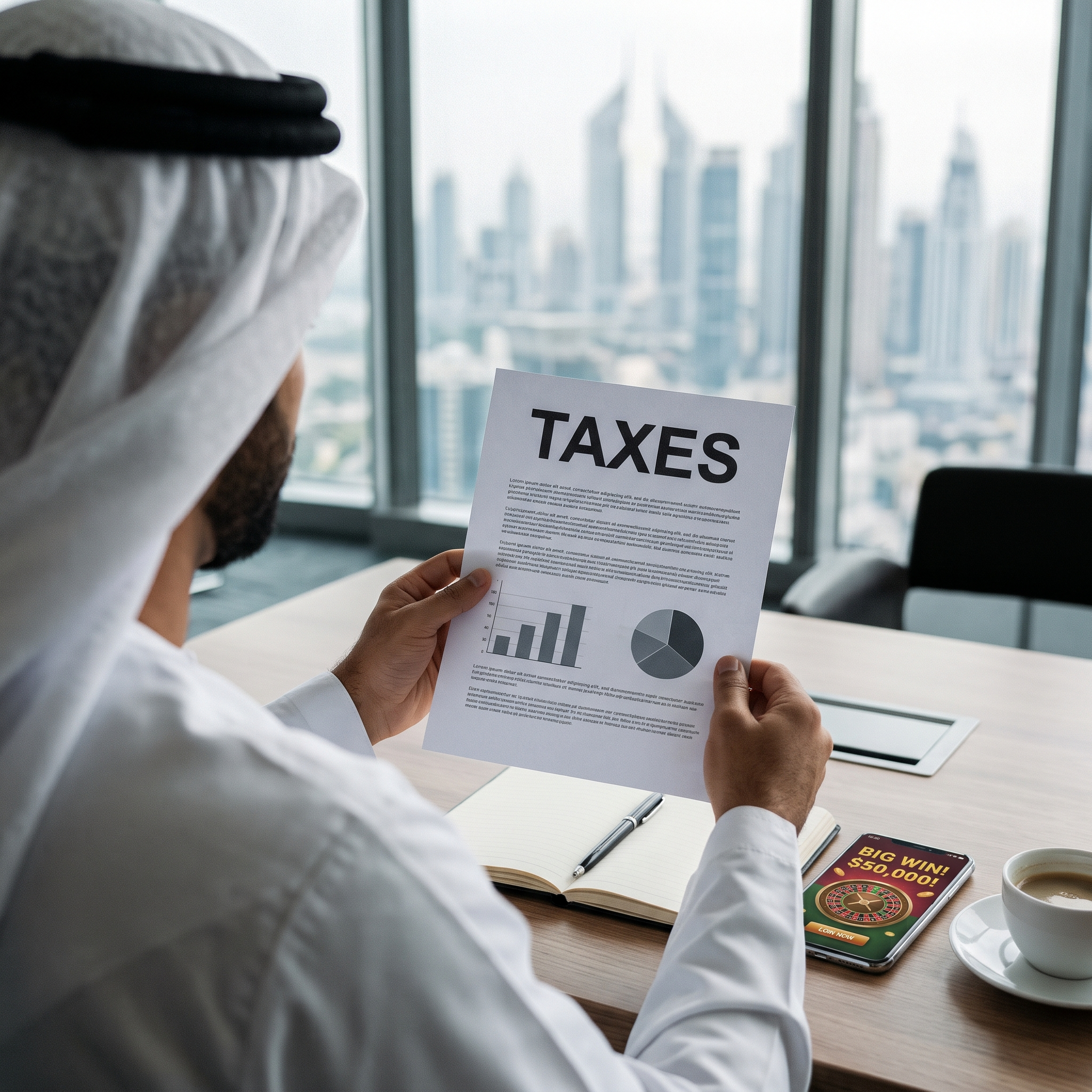
Who Sees the Money When You Withdraw?
Take a casino withdrawal from the moment you tap the button. The payout stages are in our piece on how casino money travels after you press Withdraw. Here is who knows what along the way.
The casino
The casino knows everything: your ID from KYC, every deposit, every win. It answers to the regulator that licensed it, usually Curaçao, Anjouan or Malta, and reports nothing to any authority in the Gulf.
Your bank or exchange
A bank sees who sent the payment, from which country, how much and when. An exchange sees the wallet the funds came from. Neither knows the money is a win: a statement shows a transfer. Our guide to what casino transactions look like on a bank statement shows how that looks.
The tax authority
Nothing arrives here. Offshore casinos do not report to Gulf tax offices, and there is no personal income tax to apply anyway. So nobody “finds out” about a win for tax purposes. The bank is the only local place where the payout shows up, and it shows up as a transfer.
What Banks See
Card payments carry a merchant category code, and for gambling it is 7995. Many banks decline that code by default, so a card deposit to a casino can work one day and bounce the next. That is why USDT and e-wallets became the usual rails. Banks also look at who is on the other end, the country, the amount and the pattern, and a bigger transfer sometimes brings a routine question about where the money came from. The casino’s transaction history and withdrawal confirmations answer it. That is the source of funds conversation, and with the right documents it takes minutes.
Are Casino Winnings Taxable in the Gulf?
Are casino winnings taxable in the Gulf? For a player, no in five of the six countries. Oman is the one to watch.
|
Country |
Personal income tax on a player’s winnings |
|
UAE, Saudi Arabia, Kuwait, Bahrain, Qatar |
None |
|
Oman |
5% above OMR 42,000 a year from 1 January 2028; winnings not yet addressed |
UAE
No personal income tax, and the one Gulf country building a legal framework. Federal Decree-Law No. 25/2025 took effect on 1 June 2026 and put gambling under the General Commercial Gaming Regulatory Authority (GCGRA). Play971, the first licensed platform, has been live since December 2025 for players aged 21 and over who are in the UAE. International sites are still available alongside it. For casino winnings in the UAE the tax answer is the same either way: none. More in our GCGRA news piece.
Saudi Arabia, Kuwait, Bahrain and Qatar
The picture is the same in all four. There is no personal income tax, no local online casino licensing, and a steady market of players on international sites. They choose operators licensed in Curaçao, Anjouan or Malta, play live dealers in Arabic and pay mostly in USDT. Many use a VPN. Those operators answer to their own regulators and send nothing to the local state, so a win never becomes a government record on the casino’s side. Cards are the hit-and-miss part, because local banks often decline gambling-coded payments. Our guides to Saudi Arabia, Kuwait and Bahrain show how this works day to day.
Oman
Royal Decree No. 56/2025 brings a flat 5% personal income tax from 1 January 2028, only on gross annual income above OMR 42,000, about USD 109,000. The Tax Authority expects it to reach around 1% of the population. The tax covers defined income types, and we have not seen official guidance on whether casino winnings tax in Oman applies to winnings, so it is an open point for now. Day to day, players in Oman use international sites the same way as their neighbours.
Winnings in Crypto
With USDT, the bank often does not see a casino name at all. The step that goes through a regulated exchange or OTC desk is the conversion to AED, SAR or KWD, and it comes with standard paperwork. Our guide on how to turn casino winnings in USDT into AED or cash covers that step.
Keeping Your Paperwork Simple
Players who keep a small folder make any bank conversation quick. Before depositing, they also check the casino’s licence, and our guide to verifying a casino licence shows how. The folder holds:
- Withdrawal confirmations from the casino
- The full transaction history, deposits and withdrawals
- The casino’s licence details
- Bank or wallet statements showing the payout
- Exchange records for any crypto conversion
FAQ
Does the casino tell my government that I won?
No. An offshore casino reports to the regulator that licensed it, not to the tax authority of the player’s country.
Can my bank see that I play at a casino?
It can when the payment carries a gambling code or the casino’s name. Crypto and many transfers show just a transfer.
Do I need to declare a win in the UAE?
The UAE has no personal income tax, so there is no tax return on which to declare a win.
I am an expat. Does my home country tax the win?
Tax follows residency and citizenship, not where you play. Some countries, the United States for example, tax income from anywhere in the world, and others do not. Check the rules of the country where you are a tax resident.
Will Oman’s 2028 tax apply to casino winnings?
That has not been confirmed. The tax applies only to individuals above OMR 42,000 in gross annual income and only to the income types defined in the law.
Best Casinos